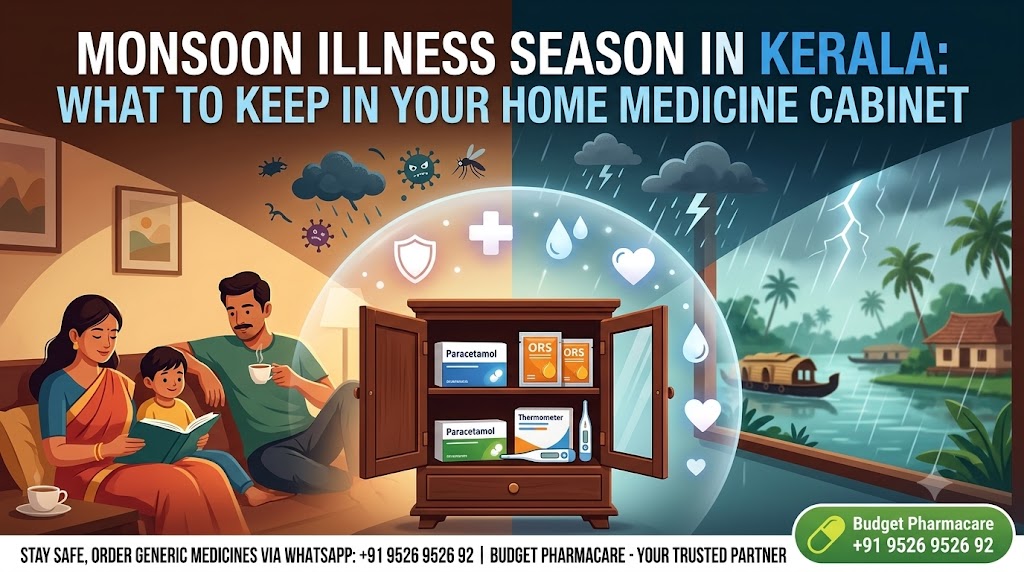
Every year, as the rains settle in across Kozhikode, Wayanad, Malappuram, and Kannur, the same pattern follows: a rise in colds and viral fevers, stomach upsets from contaminated water, and skin infections from staying in wet clothes too long. None of this is unusual — but a well-stocked home medicine cabinet can be the difference between managing it comfortably at home and a late-night scramble to find an open pharmacy.
Here's what's worth keeping on hand this monsoon, and what genuinely needs a doctor.
Why Monsoon Hits Kerala Households Harder
Kerala's monsoon combines heavy, sustained rainfall with high humidity — conditions that are ideal for waterborne bacteria, mosquito breeding, and fungal growth. Common seasonal patterns include:
-
Viral fevers and common colds, spreading faster in humid, crowded conditions
-
Waterborne infections (diarrhoea, typhoid, hepatitis A) from contaminated drinking water or food
-
Vector-borne illnesses (dengue, chikungunya) from mosquito breeding in stagnant rainwater
-
Fungal and skin infections, especially between toes and skin folds, from prolonged dampness
-
Joint and cold-related discomfort, particularly among elderly family members
Most of these are manageable at home with basic care and the right supplies — but a few warning signs (covered below) mean it's time to see a doctor without waiting it out.
The Monsoon Home Medicine Cabinet Checklist
Fever and pain relief
-
Paracetamol tablets (adult and paediatric syrup)
-
A digital thermometer
Cold, cough, and congestion
-
Cold and cough syrup or tablets
-
Antihistamines for allergy-related symptoms
-
Steam inhalation supplies or a nasal decongestant spray
Stomach and digestive issues
-
Oral rehydration salts (ORS) — essential for diarrhoea or vomiting, especially for children and the elderly
-
Antacids and digestive aids
-
A mild anti-diarrhoeal, used only as directed
Skin and wound care
-
Antiseptic liquid or cream for cuts and minor wounds
-
Antifungal cream, for damp-related skin infections between toes and skin folds
-
A basic first-aid kit — sterile gauze, adhesive bandages, and surgical tape
Mosquito and vector protection
-
Mosquito repellent cream or spray
-
A mosquito net, especially in areas near stagnant water
General household essentials
-
Multivitamins, to support general immunity during the season
-
A spare blood pressure monitor cuff or glucometer strips, if managing a chronic condition, since monsoon travel disruptions can delay a routine pharmacy visit
When Home Care Isn't Enough — See a Doctor If:
-
Fever persists beyond 2–3 days, or crosses 103°F (39.4°C)
-
There's a rash accompanying fever (a possible sign of dengue or chikungunya)
-
Diarrhoea or vomiting continues beyond 24 hours, or shows signs of dehydration (very low urine output, dizziness, extreme thirst)
-
A wound shows swelling, spreading redness, or discharge
-
An elderly family member or young child develops any of the above — their symptoms can escalate faster and deserve a lower threshold for medical attention
None of the guidance above is a substitute for medical advice — it's about knowing what's reasonable to manage at home versus what needs a doctor's attention promptly.
Keeping Your Cabinet Stocked Without the Last-Minute Rush
The most common mistake isn't not knowing what to buy — it's realising you're out of ORS or paracetamol at 11 PM during heavy rain. A simple habit that helps: restock your monsoon essentials at the start of the season (June) rather than reactively, and keep a basic checklist (like the one above) somewhere visible at home.
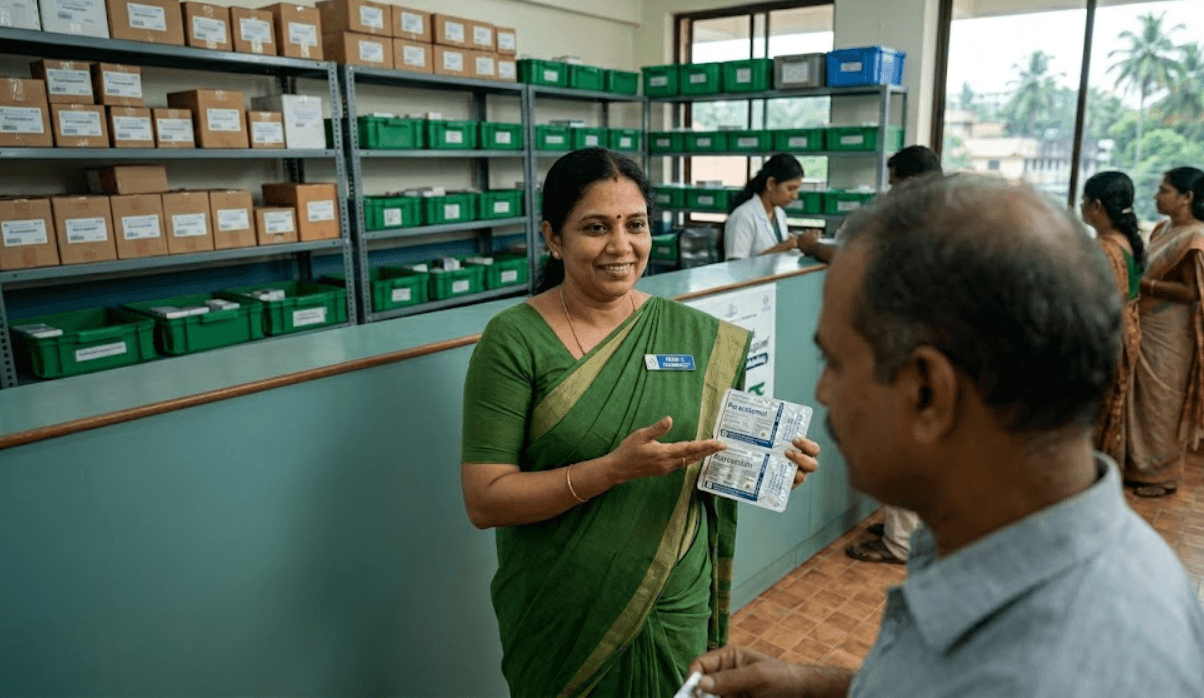
If you'd rather not make a special trip, photograph your usual list and send it via WhatsApp to your nearest Budget Pharmacare store — a pharmacist can confirm what's in stock and arrange home delivery, so your cabinet stays stocked through the season without repeated store visits.
A Note on Safety
This article is for general information and does not replace medical advice. Persistent fever, signs of dehydration, or any rash accompanying fever should be evaluated by a doctor promptly — this is especially important for young children, elderly family members, and anyone managing a chronic condition.
FAQ
Q1. What medicines should I keep at home during Kerala's monsoon season?
A basic monsoon kit should include paracetamol (adult and paediatric), a thermometer, cold and cough medicine, ORS sachets, antacids, an antiseptic and antifungal cream, a basic first-aid kit, and mosquito repellent.
Q2. Why does illness increase during the monsoon in Kerala?
Heavy rainfall combined with high humidity creates ideal conditions for waterborne bacteria, mosquito breeding, and fungal growth, leading to a seasonal rise in viral fevers, stomach infections, vector-borne illness, and skin infections.
Q3. When should a fever during monsoon be seen by a doctor?
If fever persists beyond 2–3 days, crosses 103°F (39.4°C), or is accompanied by a rash, it's important to see a doctor promptly, as this can indicate dengue or chikungunya rather than a routine viral fever.
Q4. Can ORS be given to children for diarrhoea?
Yes — ORS is one of the most important items to keep at home during monsoon, especially for children and the elderly, to prevent dehydration from diarrhoea or vomiting. If symptoms persist beyond 24 hours, consult a doctor.
Q5. What skin issues are common during monsoon, and how should they be treated?
Fungal infections between toes and in skin folds are common from prolonged dampness. Keeping feet dry, using an antifungal cream, and changing out of wet clothes promptly are the main preventive steps.
Q6. Is it safe to self-treat a viral fever at home?
For a routine, mild viral fever without a rash, paracetamol and rest are generally appropriate. However, persistent fever, high fever, or fever with a rash should be evaluated by a doctor rather than self-treated.
Q7. How can I prevent mosquito-borne illness during monsoon?
Use mosquito repellent, sleep under a mosquito net where relevant, and avoid stagnant water collecting near your home, since this is where mosquitoes that spread dengue and chikungunya breed.
Q8. Can I order monsoon medicine essentials without visiting a store?
Yes — send your list of essentials via WhatsApp to your nearest Budget Pharmacare store, and a pharmacist can confirm stock and arrange home delivery.
Q9. Do elderly family members need extra precautions during monsoon?
Yes — elderly patients, along with young children, tend to have symptoms escalate faster and should be seen by a doctor sooner than the general 2–3 day threshold for fever or digestive symptoms.
Q10. What's the best time to restock a home medicine cabinet for the monsoon?
At the start of the season (typically early June in Kerala), rather than reactively once symptoms appear — this avoids last-minute searches for basics like ORS or paracetamol during heavy rain.