Every month, families across Kozhikode, Wayanad, Malappuram, and Kannur walk into a pharmacy and pay two very different prices for the exact same medicine — depending on whether the strip in their hand says a brand name or a generic name. Most people have no idea the gap even exists, let alone how large it is.
This guide breaks down exactly what separates branded and generic medicines, how much a typical Kerala household spends on each, and how to switch safely — without a single compromise on quality.
Branded and Generic Medicine: What's Actually Different?
Nothing about how the medicine works. Everything about how it's priced.
A branded medicine is the version a pharmaceutical company develops, patents, and markets under a trade name — the cost of years of research, clinical trials, and advertising is built into every strip you buy. Once that patent expires, other CDSCO-approved manufacturers are free to produce the same formula, with the same active ingredient, at the same dosage, without those upfront costs. That's a generic medicine.
Both versions must pass India's bioequivalence standards — meaning they're absorbed into the body the same way and deliver the same therapeutic effect. The only things that differ are the name on the box, the packaging, and, most importantly, the price.
The Real Numbers: What Families Save Every Month
Here's what the price gap looks like in practice for common long-term conditions in Kerala:
-
Diabetes management (metformin, insulin combinations): a monthly branded prescription running ₹1,200–1,500 typically drops to ₹400–500 with generic equivalents.
-
Hypertension (antihypertensives, statins): branded monthly costs of ₹800–1,000 fall to roughly ₹250–350.
-
Thyroid medication (levothyroxine): a small monthly saving individually, but one that compounds significantly over years of daily use.
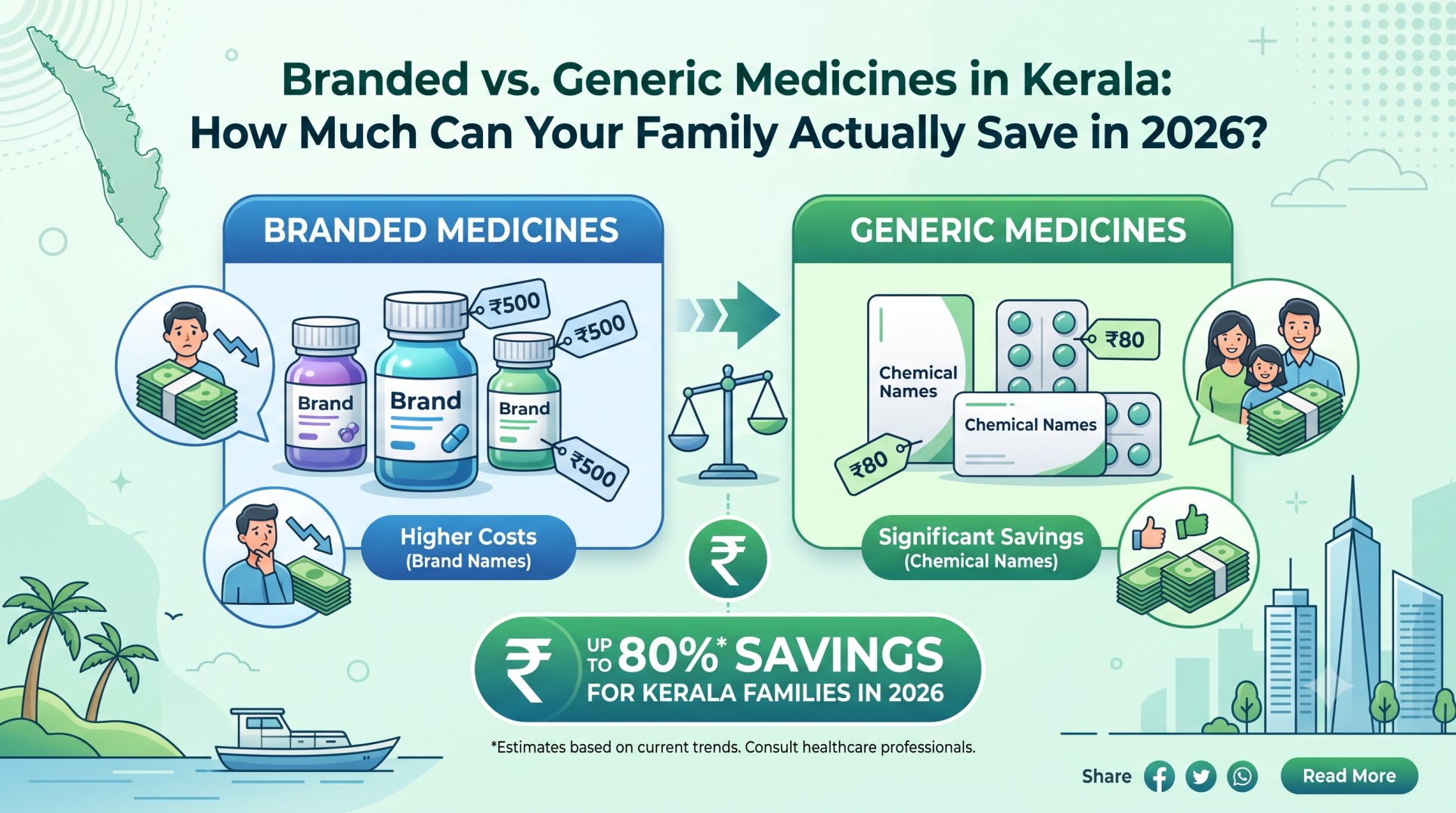
Across categories, the typical saving is 60–70% — which for a family managing two or three chronic conditions can mean ₹1,000–2,000 back in the household budget every single month. Over a year, that's often the equivalent of an extra month's household expenses.
Why Isn't Everyone Already Switched?
Mostly habit, and a lingering (and outdated) doubt about quality. A few honest reasons people hesitate:
-
Doctors historically prescribed by brand name, and patients simply asked for what was written — even though the National Medical Commission now requires doctors to prescribe using the generic name in capital letters specifically so patients can identify and choose freely.
-
Packaging and appearance vary between manufacturers, which can make a switched medicine feel unfamiliar even when the active ingredient is identical.
-
A small category of medicines — certain anti-epileptics, blood thinners, and some thyroid medications — have a narrow therapeutic index, where even minor absorption differences can matter. For these, a quick conversation with your doctor or pharmacist before switching is genuinely worth having.
For the overwhelming majority of everyday and chronic-condition medicines, though, switching is safe, government-encouraged, and simply a matter of getting comfortable with a different-looking strip that does exactly the same job.
How to Switch Safely, Step by Step
-
Bring your existing prescription — branded or generic, any valid prescription works.
-
Ask your pharmacist for the generic equivalent — match the active ingredient (salt name), strength, and dosage form exactly.
-
Check the manufacturer — buy only from WHO-GMP certified manufacturers (Sun Pharma, Cipla, Dr. Reddy's, Lupin, Zydus, and similar established names).
-
Flag narrow-therapeutic-index medicines to your doctor first — epilepsy, certain heart, and thyroid medications are worth a quick check-in before switching.
-
Keep taking it as prescribed — a different tablet colour or shape is cosmetic, not clinical.
What This Looks Like at Budget Pharmacare
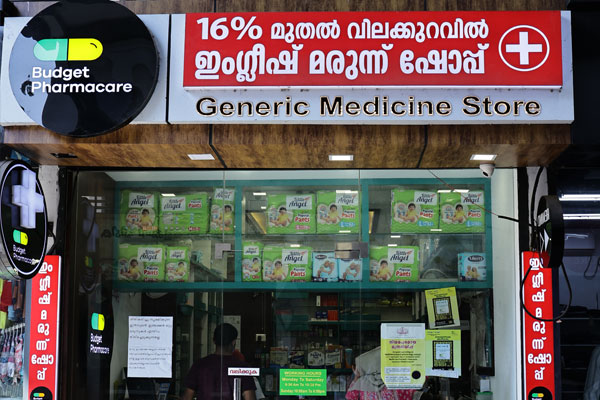
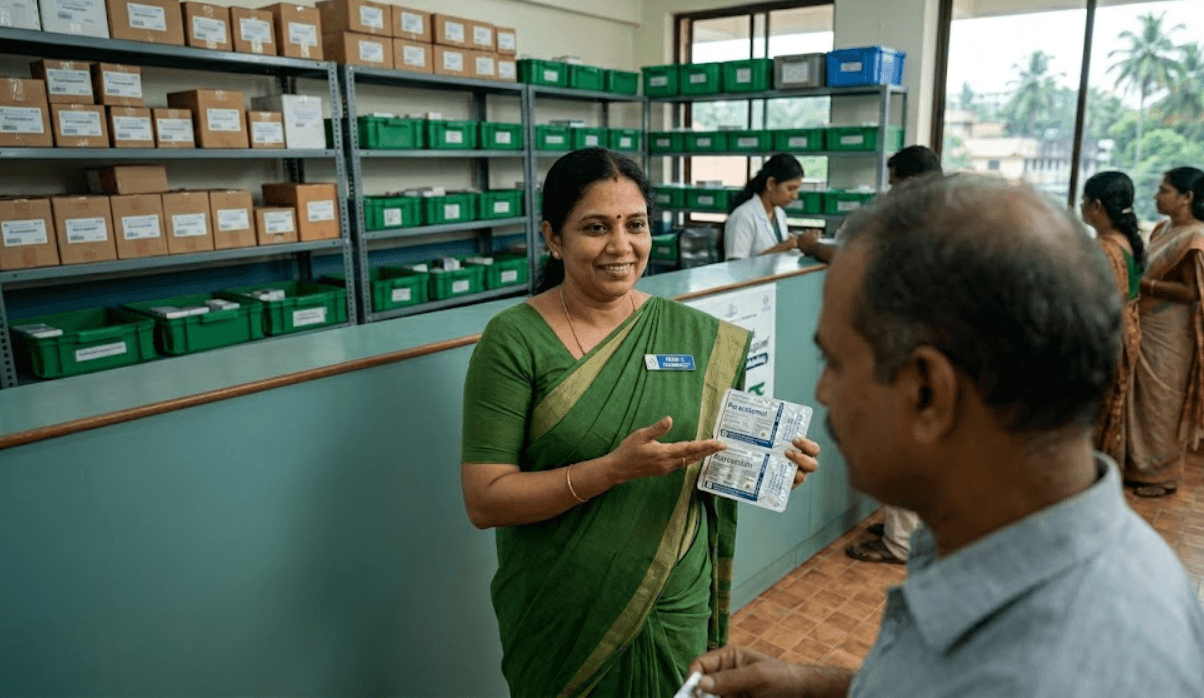
This is exactly the switch Budget Pharmacare was built around. Every one of our 25 stores across Kozhikode, Wayanad, Malappuram, and Kannur is run by pharmacists registered with the Kerala State Pharmacy Council, who can walk you through the branded-to-generic switch in Malayalam, explain dosage clearly, and flag anything that needs a doctor's input first.
For families managing chronic conditions, we run monthly refill programmes — send your prescription once on WhatsApp, and reorder every month without a store visit. Combined with home delivery, it means the switch to generics doesn't just save money; it removes a recurring monthly errand too.
Ready to see your own savings? Photograph your current prescription and WhatsApp it to your nearest Budget Pharmacare store — our pharmacists will quote you the generic price for every item on it, no obligation.
A Note on Safety
This article is for general information and does not replace medical advice. Always consult your doctor before switching medication for a chronic or serious condition, particularly epilepsy, blood-thinning, or certain thyroid therapies.
FAQ
Q1. What's the actual difference between a branded and generic medicine?
Only the name, packaging, and price. Both contain the same active ingredient, in the same strength, and must meet the same CDSCO bioequivalence standards before sale in India.
Q2. How much can I save by switching to generics in Kerala?
Typically 60–70% compared to branded prices — for a family managing chronic conditions like diabetes or hypertension, that's often ₹1,000–2,000 saved every month.
Q3. Are there any medicines I should NOT switch without asking a doctor?
Yes — a small group of narrow-therapeutic-index drugs, including certain anti-epileptics, blood thinners, and some thyroid medications, where absorption differences between manufacturers can matter. Check with your doctor or pharmacist first.
Q4. Will my doctor's branded prescription work at a generic pharmacy?
Yes. Any valid prescription — branded or generic — can be filled. The pharmacist will show you the generic equivalent and the price difference; the final choice is always yours.
Q5. How is Budget Pharmacare different from a Jan Aushadhi Kendra?
Both offer significant savings on generics, but Budget Pharmacare stocks a much wider range (8,000+ medicines vs. roughly 2,000 at most Jan Aushadhi Kendras), offers WhatsApp ordering, home delivery, longer hours, and Malayalam-speaking pharmacists across 25 Kerala locations.
Q6. Can I order medicines without visiting the store?
Yes — photograph your prescription and send it via WhatsApp to your nearest store. A pharmacist reviews it, confirms price and availability, and arranges delivery or pickup.
Q7. Do generic medicines take longer to work or work differently?
No. Bioequivalence testing confirms they're absorbed into the body the same way and produce the same therapeutic effect as the branded version.
Q8. Why does the tablet look different from the branded one I used before?
Colour, shape, and packaging are manufacturer choices, not clinical differences — the active ingredient, strength, and effect remain the same.
Q9. Are Budget Pharmacare's generic medicines sourced from reputable manufacturers?
Yes — from over 20 leading Indian manufacturers including Sun Pharma, Cipla, Abbott, Lupin, Dr. Reddy's, and Zydus, all WHO-GMP compliant.
Q10. Do you offer monthly refill reminders for chronic conditions?
Yes — patients on long-term medication (diabetes, BP, thyroid) can set up monthly reorder via WhatsApp without visiting the store each time.